Nexus War: Civilization
- 4.3
- Rating
- 10.00M
- Installs
- Free
- Price

 Analysis by App-foxy
I approached Nexus War: Civilization as a newcomer rather than assuming I already understood its science-fiction strategy systems. That turned out to be the right way to play it. The opening experience is less about mastering everything immediately and more about learning how to turn a small foothold into a useful base for a wider galactic campaign. If you enjoy planning, gradual expansion, and making decisions that matter a few steps later, this is an easy game to become curious about.
It is a free strategy game from Phantix Games, built around a futuristic conflict for control of Origin. The premise is direct, but the appeal comes from the decisions underneath it: what to improve first, when to expand, how aggressively to pursue objectives, and how carefully to manage your attention. I found it more satisfying when I treated each session as a short planning exercise instead of rushing through every available action.
The game is rated Teen, and it has become a substantial mobile release, with over ten million installs and an average score of 4.3 from around forty-three thousand ratings. Those figures suggest a healthy audience, but they do not guarantee that its style will suit everyone. In my experience, the most important question is whether you like strategy games that ask you to return, check progress, and make several connected choices rather than finish a complete match in one sitting.
You May Also Like

 Blood Strike: 2.5 Anniversary
Blood Strike’s Loadouts Turn Every Drop Into a Tactical Gamble
A close look at Blood Strike’s custom loadouts: how fast access to signature weapons reshapes its battle royale rhythm, rewards preparation, and narrows the gap between fights.

 Pandora - Music & Podcasts
Pandora’s Music Is Easy to Start, but Harder to Recover
Pandora’s strength is its low-effort path from a seed to a station. Its weak spot is how much confidence it asks you to place in connection, setup, and quiet recovery.

 8 Ball Pool
 Is Built on Rivalries, Rematches, and Routine
A close look at the rivalries, rematches, shared routines, and unanswered safety questions that turn a quick pool match into a persistent mobile community.

 Samsung Music
’s Quiet Strength Is Playing What You Already Own
Its reach comes less from spectacle than from dependable access to a personal library. That simplicity is both the app’s strongest retention engine and its ceiling.

 AccuWeather: Weather Radar
AccuWeather Review: A Quick, Clear Forecast for Everyday Decisions
For everyday plans, the best forecast is the one you can understand quickly. AccuWeather makes rain timing, radar, and local conditions easy to act on, with a few trade-offs.

 Hill Climb Racing
Why Hill Climb Racing Still Turns Crashes Into One More Run
A tiny car, a bumpy hill and one more upgrade: Hill Climb Racing keeps resurfacing because its simple chaos makes every near-miss feel personal.
More From Our News Desk



What the first session actually feels like
My first useful goal was not to understand the whole galaxy. It was simply to identify the immediate objective, complete the most obvious early actions, and notice how one improvement affected the next decision. That approach made the opening feel manageable. Trying to inspect every menu at once would have made the game seem more complicated than it needed to be.
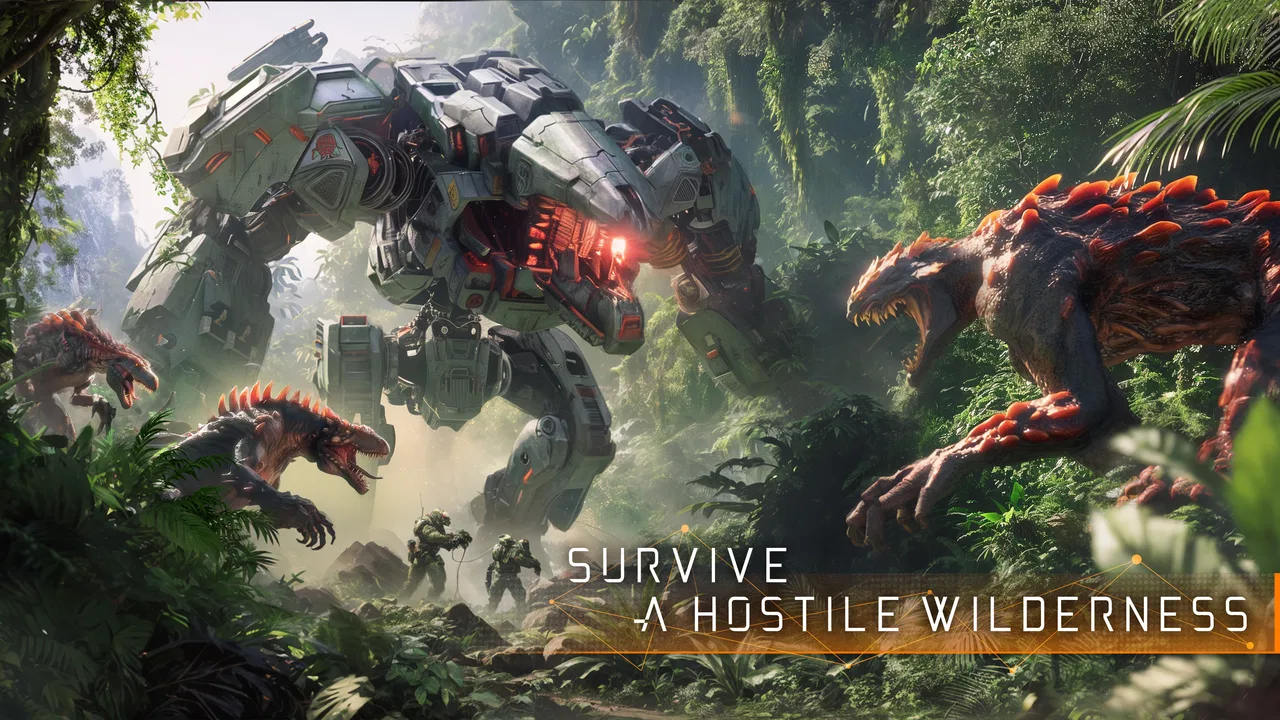
The science-fiction setting gives the strategy a clear identity, but the game is still fundamentally about priorities. The visual theme may attract you, yet staying power comes from deciding which opportunity deserves attention now and which can wait. I recommend reading the early prompts instead of tapping through them automatically. They are easy to overlook, but they help establish the rhythm of building, checking progress, and preparing for the next objective.
A realistic everyday use case is a short evening session after work or school. I can open the game, review what has finished, collect the useful results, select the next improvement, and then leave. When I have more time, I can continue into broader planning. This makes it more flexible than a strategy game that demands a long uninterrupted match, although it also means the experience is tied to returning regularly.
The first meaningful success is best understood as a chain rather than a single victory screen. You make an early improvement, use it to unlock or support the next task, and then see your settlement become more capable. That small loop is important because it teaches the game’s logic without requiring advanced knowledge. Once I understood that progress was about connecting actions, the larger setting felt less intimidating.
My main beginner recommendation is to choose one clear objective at a time. Do not spend your first session trying to optimize every resource or investigate every system. Follow the immediate path, observe what it unlocks, and only then decide whether you want to specialize in faster growth, stronger preparation, or broader expansion.
Getting through the initial setup without overthinking it
Installation is straightforward for compatible devices running Android 5.0 or later. The game is free to start, which makes it simple to test without committing money first. I would still approach the opening with a trial mindset: play long enough to see whether the pace of its strategy suits you before considering any optional purchase.
The current version is 0.2.963, and that is worth checking when troubleshooting an unusual problem or comparing your experience with someone else’s. Version information can matter when a guide describes a menu differently, so I would avoid assuming that every older tip applies exactly to the version on your phone.
Once inside, I suggest taking a slow tour of the interface. Look for the area that shows your current objective, the place where ongoing actions are tracked, and the controls that lead to expansion or broader activity. You do not need to memorize all of them. The useful habit is knowing where to return when you are unsure what should happen next.
One source of friction is that strategy interfaces often make several buttons look equally important. In this game, I found it more helpful to ask, “What action advances my current goal?” rather than “What can I tap?” That distinction prevents wasted attention and keeps the opening from becoming a tour of unrelated screens.
You should also decide early how you feel about optional spending. In-app purchases range from $0.99 to $99.99 per item, so the pricing can cover very different levels of commitment. I would not treat purchases as part of the basic learning process. First understand the normal progression, then decide whether convenience is worth paying for. Spending before you know which systems you enjoy can make it harder to judge the game fairly.
Finding the first satisfying win
For a new player, the first satisfying win is not necessarily a dramatic conquest. It is the moment when your choices begin to support one another. I reached that point by completing the early task in front of me, improving the part of the base that supported continued progress, and then checking what new route became available.
This is where a useful tactical habit appears: avoid starting several improvements simply because they are visible. A crowded plan can leave you with progress in many directions but no strong result. I prefer to identify the bottleneck, improve that first, and only then spread attention elsewhere. In a mobile strategy game, this saves time and makes the cause-and-effect relationship easier to see.
Another practical tip is to use short sessions to prepare rather than constantly chase a major breakthrough. Before closing the game, I like to leave a sensible next action selected or at least know what I will inspect when I return. That reduces the feeling of restarting from zero and makes the game fit naturally into spare moments.
If you are playing while distracted, be careful with irreversible or high-impact choices. The game encourages a forward-looking style, so a quick tap can shape what you do next. I found that pausing for a few seconds to read the outcome was more valuable than trying to move quickly. The best early advantage is understanding, not speed.
Players who enjoy competition should also recognize that a personal victory and a strategic victory may be different. Completing an objective can feel good, but it may not mean your wider position is secure. I recommend checking whether your recent success improved your ability to continue. If it did not, treat the result as a lesson and adjust the next decision instead of assuming the whole plan is working.
Where new players commonly get confused
The biggest confusion comes from expecting every action to produce an immediate, obvious reward. Some choices are valuable because they make later choices easier. That delayed payoff can feel slow if you are used to action games or fast puzzle games. I became more comfortable once I judged an action by what it enabled, not only by what appeared on the screen right away.
Another common mistake is treating the game like a simple race. Expansion sounds like the obvious answer, but expanding without enough preparation can create a wider problem rather than a stronger position. My rule is to ask whether the next step improves control or merely increases responsibility. When the latter is true, strengthening the foundation first is usually the calmer choice.
The game can also feel busy because the science-fiction presentation suggests a large world from the beginning. That scale is appealing, but it can make a beginner believe that every part of the setting must be understood immediately. It does not. Concentrate on the current objective, learn the vocabulary as it appears, and let the broader systems become familiar through use.
Players sometimes wonder whether the free entry means they must spend money to understand the game. I did not find that necessary for the early learning process. The better approach is to establish your normal routine first. If you later decide that a purchase saves time or supports your preferred style, make that choice deliberately. Do not buy simply because a menu presents an offer while you are still unsure what it changes.
There is also a difference between a game that is free to download and a game that is free from pressure. The presence of optional items priced from $0.99 up to $99.99 means buyers should pay attention to their own limits. I would recommend setting a personal budget before playing if you are prone to impulse purchases, especially during a long progression cycle.
Even the age rating matters when choosing who should play. With a Teen content rating, I would not present it as a universal family strategy game without checking whether its tone and themes are appropriate for the particular player. Adults looking for a serious space-themed planning game may find the rating unsurprising, but parents should make their own decision rather than relying on the word “strategy” alone.
How it compares with more familiar strategy choices
Compared with a traditional turn-based strategy game, Nexus War: Civilization feels more suited to ongoing progress than to one complete campaign played from beginning to end. A turn-based alternative is often better when I want a clearly defined match, deep control over every move, and a firm stopping point. This game is a better fit when I enjoy checking a developing position and returning to an evolving plan.
Compared with a quick competitive mobile title, it asks for more patience. I would not choose it when I have only a few minutes and want an instantly decisive round. Its strength is the gradual relationship between preparation and expansion. That can be rewarding for a planner, but frustrating for someone who wants constant action.
It also differs from a relaxed building game because its science-fiction conflict gives decisions more tension. Decorating or casual construction may be preferable if you want a low-pressure experience with no concern about strategic consequences. Here, I found that the most enjoyable moments came from thinking ahead, not simply making the screen look busier.
One non-obvious trade-off is attention. The game is convenient for short check-ins, but that convenience can encourage frequent returns. If you prefer games that stay completely contained within one session, this structure may feel like a chore. If you like having a long-term project on your phone, the same structure becomes its main advantage.
Who will enjoy it, and who should skip it
I would recommend it to someone who likes science-fiction settings, incremental development, and decisions whose value becomes clearer over time. It is especially approachable for a first-time strategy player who is willing to learn by following objectives instead of demanding complete control from the opening minute.
I would be more cautious recommending it to anyone who dislikes waiting between decisions, returning to check progress, or managing several connected priorities. Players looking for a purely offline-feeling experience, a short story with a fixed ending, or a quick arcade loop may be happier elsewhere.
It is also not the best choice for someone who wants every strategic system explained in a single tutorial. The opening helps, but part of the learning comes from experimenting and noticing how actions connect. That is a reasonable design for an ongoing strategy game, though it does place some responsibility on the player to remain curious.
For a first-time user, my suggested path is simple: install it, complete the early objective without spending money, identify which action currently limits progress, and return later to see how your choice changed the next step. If that loop feels satisfying, continue. If it feels like maintenance rather than play, the game is probably not matching your preferred style.
What to do after the opening hours
Once the basic rhythm makes sense, stop measuring progress only by the number of completed tasks. Start looking at the quality of your position. Are your improvements supporting one another? Are you expanding because the opportunity is good, or because the button is available? Are you preparing for the next challenge, or merely reacting to the current one?
This is also the point where I would create a personal priority order. For example, you might value reliable development before ambitious expansion, or prefer to pursue broader control as soon as the game allows it. Neither approach needs to be treated as universally correct. The useful part is understanding why you chose it and recognizing when the situation calls for a change.
Keep an eye on how much time the game asks from you. A healthy routine might be a few purposeful check-ins rather than constant monitoring. If you notice yourself opening it without a plan, use that as a signal to pause. Strategy is more enjoyable when each visit has a reason, and less enjoyable when it becomes an automatic habit.
My final view is positive but measured. Phantix Games has created a sci-fi strategy experience that rewards patience and connected thinking, and the free starting point makes it easy to discover whether that style works for you. Its main weakness is the same quality that gives it staying power: ongoing progress can feel demanding if you want a self-contained game.
After trying the early route from setup to a meaningful first success, I would recommend giving it a fair test rather than judging it from the store summary alone. Take the first objectives slowly, resist premature purchases, and focus on the bottleneck in front of you. If you enjoy turning small improvements into a larger galactic plan, this is worth keeping on your phone; if you want instant action and a clean finish, choose a different strategy format.
FAQs for Nexus War: Civilization
01What is Nexus War: Civilization?
Nexus War: Civilization is a strategy game for mobile devices that combines city building, resource management, exploration, and real-time or asynchronous competitive gameplay. Players develop a base, train and upgrade units, research technologies, recruit heroes, and expand across a science-fiction world. Its progression system is designed for players who enjoy long-term planning rather than short, purely casual matches.
02Can Nexus War: Civilization be played offline?
Nexus War: Civilization is primarily an online game, so a stable internet connection is generally required for logging in, synchronizing progress, participating in events, communicating with other players, and competing on the world map. Offline play is not the main focus, and some features may not work without a connection. Players should also expect occasional maintenance, updates, or server-related interruptions.
03Is Nexus War: Civilization free to download and play?
The game can usually be downloaded and started for free, but it includes optional in-app purchases. These purchases may provide premium currency, resource packs, acceleration items, cosmetic content, or progression advantages. You can make progress without spending money, although upgrading buildings, researching technologies, and developing heroes may take longer. Parents should review purchase settings before allowing children to play.
04Does Nexus War: Civilization support multiplayer gameplay?
Yes, multiplayer interaction is an important part of Nexus War: Civilization. Depending on the available server and game systems, players can join alliances, coordinate attacks, exchange assistance, compete for territory, and participate in large-scale events. Cooperation can make progression easier, but competitive activities may also create pressure to remain active and keep pace with other players.
05What devices and permissions are needed to play Nexus War: Civilization?
Before downloading Nexus War: Civilization, check that your Android or iOS device meets the current requirements shown on the official store page. The game may require considerable storage because of downloadable assets and updates, and older devices can experience longer loading times, reduced performance, or battery drain. Internet access is essential, while notification and account-related permissions may be requested for alerts and synchronization.
Pros
- Large-scale battles make alliances and strategy feel meaningful.
- Multiple civilizations offer varied units
- bonuses
- and playstyles.
- The sci-fi setting gives the game a distinctive visual identity.
- Regular events provide extra goals beyond the main campaign.
- Base development and research create satisfying long-term progression.
Cons
- Progress can feel slow without frequent play or resource spending.
- Many menus and systems may overwhelm new strategy-game players.
- Combat outcomes can depend heavily on troop power and upgrades.
- Energy and resource timers limit how quickly you can advance.
- Server competition may favor established alliances and veteran players.

Nexus War: Civilization
Gallery